An Arizona judge released a DUI suspect after questioning an arrest report produced with artificial intelligence. The immediate problem was basic: the court could not determine what the officer had personally written and what the software had generated. ABC News reported the decision on November 13. It concerned an initial court appearance following an October …
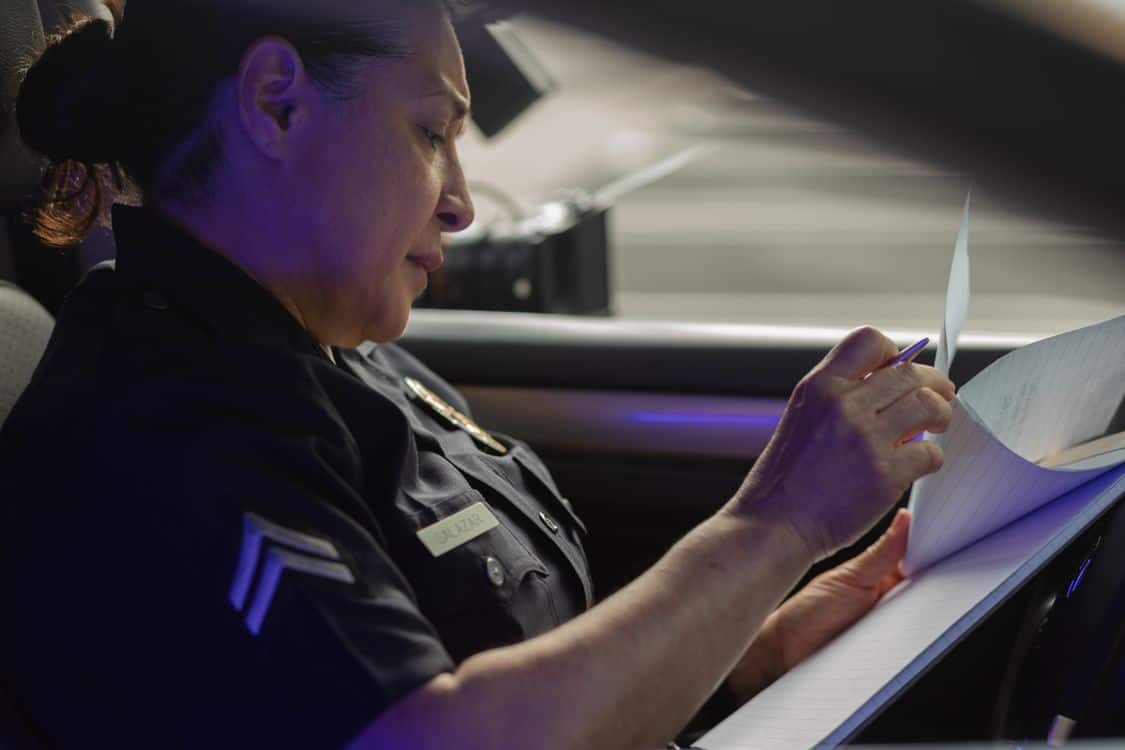
An Arizona judge released a DUI suspect after questioning an arrest report produced with artificial intelligence. The immediate problem was basic: the court could not determine what the officer had personally written and what the software had generated.
ABC News reported the decision on November 13. It concerned an initial court appearance following an October 29 arrest, rather than a trial deciding whether the driver was guilty.
A polished report still needs an identifiable author
According to account of the hearing, Maricopa County Superior Court Judge Daniel Fenzel said the court could not determine probable cause at that time. The report disclosed that it had been prepared with assistance from Truleo AI.
Arizona’s Department of Public Safety said officers are trained to check AI-assisted reports against recordings and verify details, with supervisory review also required. The release did not prevent the case from proceeding later, and the ruling did not establish that the software had invented a particular fact.
The dispute helps explain the distinction between generating a narrative and using transcription to review evidence in criminal cases. A transcript provides a way to locate recorded speech. A narrative goes further by selecting events, arranging them and explaining their significance.
Those are different tasks, even when the resulting documents look equally fluent. A readable account can obscure an unanswered question about where an assertion came from.
A recording, transcript and report are three different records
In a June policy paper, the Federation of American Scientists described systems that draft police reports from officer input or body-camera recordings. Its analysis raised concerns about fabricated details, bias and the difficulty of evaluating these tools without adequate transparency.
That background does not prove an error in the Arizona report. It explains why checking a finished paragraph requires more than confirming that it sounds like something an officer might write.
| Record | Useful for | Still needs checking |
|---|---|---|
| Original recording | Reviewing captured sound and images | What happened outside the recording |
| Transcript | Finding speech and comparing statements | Words, speakers and timestamps against the recording |
| Written report | Understanding the officer’s account | The source of each material observation |
For example, a transcript might accurately reproduce an officer saying that a driver appeared unsteady. That confirms the words were spoken; it does not independently establish that the driver was unsteady. The distinction becomes harder to see if a summary removes the attribution and presents the observation as an unqualified fact.
The useful audit starts with the disputed sentence
An evidence review can work backwards from a consequential assertion. Who made it? Was it visible on video, spoken on audio, entered separately by the officer or inferred during drafting? Can the reviewer find the underlying material without guessing?
Timestamps are helpful because they make that comparison repeatable. They do not remove the need to listen, particularly when speakers overlap, background noise obscures a word or an automatic transcript assigns speech to the wrong person.
A sensible document workflow would also preserve the distinction between the original generated draft and the officer’s corrections. Without that separation, a later reviewer may be able to inspect the final text but have no clear account of how an important statement entered it.
The Arizona hearing shows where the issue becomes consequential. A report was being used to support a restriction on someone’s liberty, and the judge needed a reliable basis for that decision. Saving drafting time did not answer the court’s question about authorship.